
Compression of the ulnar nerve at the elbow — the second most common nerve compression. It produces numbness in the small and ring fingers and, if ignored, lasting hand weakness.
Most common compression
Nerve affected
Site of compression
Cubital tunnel syndrome is compression of the ulnar nerve as it travels behind the inner elbow — the spot people call the “funny bone.” Bending the elbow stretches and squeezes the nerve, which is why symptoms often appear at night or while holding a phone.
Because the ulnar nerve powers the small muscles that give the hand its fine dexterity and grip, untreated compression can lead to clumsiness, weakness, and visible muscle wasting between the fingers.
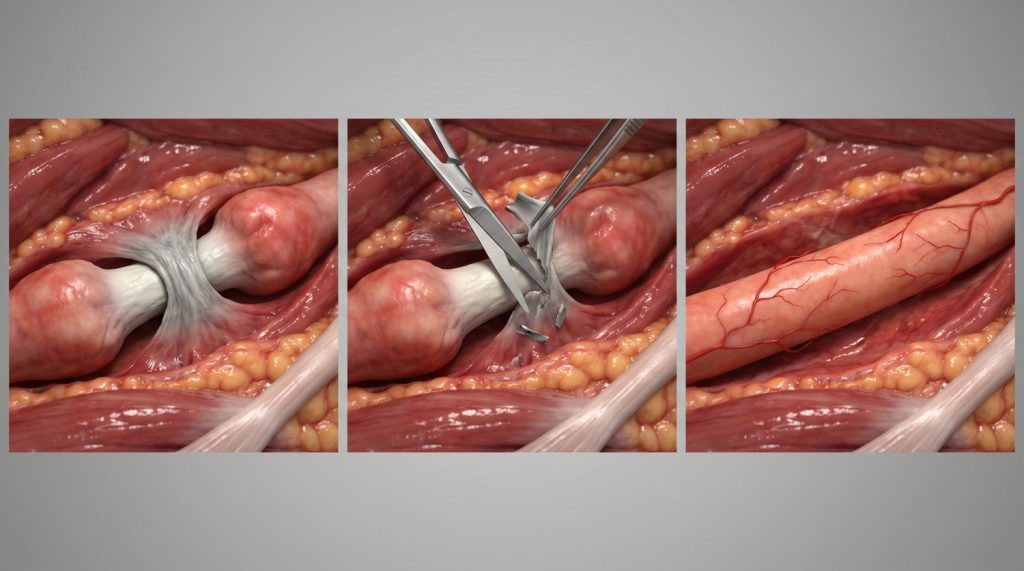
Fig: Nerve compression at the elbow (left), surgical decompression (center), and recovery (right).
Evaluation includes provocative elbow-flexion testing and assessment of grip and pinch strength. A nerve conduction study localizes where along the nerve the compression is occurring, which directly guides the surgical plan.
Peripheral nerve surgery is its own discipline. Dr. Michaeli has dedicated his practice to the nerves, with fellowship-level training and thousands of nerve procedures.
Nerve work is measured in millimeters. Every repair is performed under high-magnification with microsurgical instruments and the latest reconstructive techniques.
Many patients arrive having been told nothing more can be done. A dedicated nerve evaluation often reveals options that general specialists do not offer.
Night-time elbow splinting to limit bending, plus padding and activity changes, can resolve mild cases.
The nerve is released from the tight tunnel where it is being pinched, relieving pressure with minimal disruption.
When needed, the nerve is repositioned to a tension-free path in front of the elbow to prevent recurring compression.
A soft dressing protects the area. Gentle motion begins early to prevent stiffness.
Numbness and night symptoms begin to settle as pressure on the nerve resolves.
Grip and fine coordination rebuild with guided therapy as needed.
Long-standing cases recover gradually; sensation and strength can improve for up to a year.
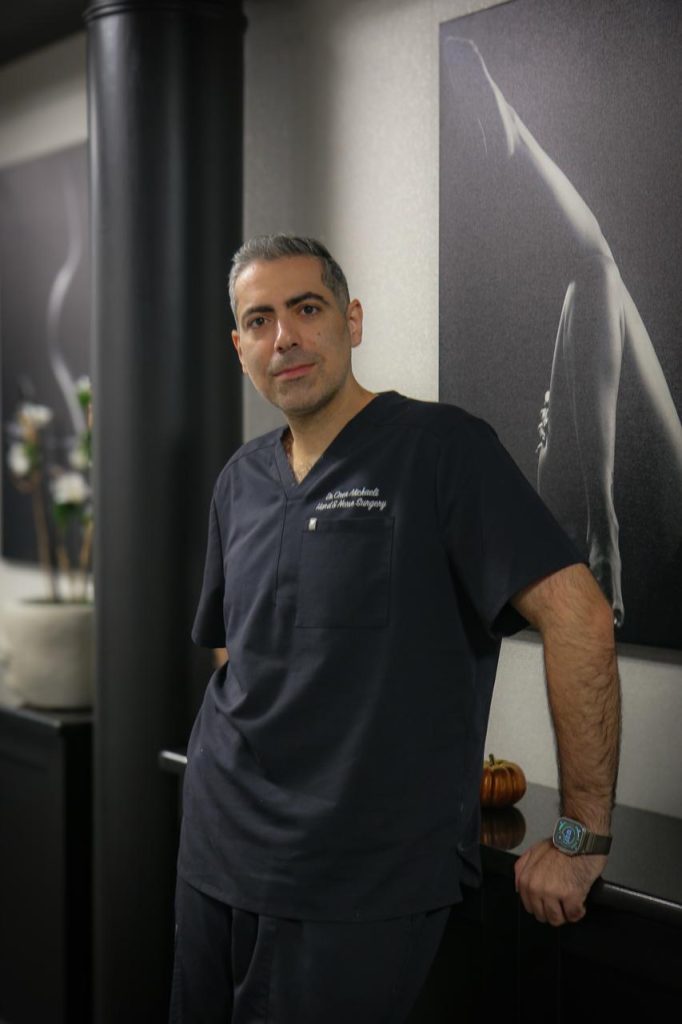
Peripheral Nerve & Brachial Plexus Surgeon · New Jersey & New York
Dr. Michaeli is among the most experienced and trusted peripheral nerve specialists on the East Coast, combining board-certified hand surgery expertise with dedicated peripheral nerve training. He has helped patients across the region regain function when they were told nothing more could be done.
Dr. Michaeli explains what is happening to the nerve, the treatment options, and what recovery looks like.
A short explainer video from Dr. Michaeli will appear here. Replace the poster with your YouTube or Vimeo embed when ready.
“After years of being told my pain was something I’d have to live with, Dr. Michaeli found the nerve causing it and fixed it.”
Neuroma surgery
“I had given up hope of using my hand again. The nerve transfer gave me back movement the other doctors said was gone.”
Nerve transfer
“The carpal tunnel release was quick and the night pain was gone immediately. I only wish I’d done it sooner.”
Carpal tunnel release
In most cases no referral is required to schedule a consultation. We will help you understand your insurance coverage and any documentation your plan may request.
No. Many nerve conditions are first managed without surgery. Dr. Michaeli will recommend the least invasive effective option for your specific situation and only proceed to surgery when it offers the best outcome.
Nerve tissue is time-sensitive. The earlier a compressed or injured nerve is evaluated, the more options exist to protect and restore function. If you have progressive weakness or numbness, seek evaluation promptly.
Schedule a consultation with Dr. Michaeli to understand your options and build a plan that fits your life.